- JANUS SIGNAL
- Posts
- From AI-Driven Biology to Accelerated Therapeutic Discovery
From AI-Driven Biology to Accelerated Therapeutic Discovery
Biotech x AI: New Frontier for Startup Builders

JANUS SIGNAL
December 09, 2025
JANUS SIGNAL
Welcome to this week's Signal.
This week, we are looking at the rapid shift happening at the intersection of biotechnology and AI, a space where computational power reshapes discovery cycles and investor interest accelerates.
Spotlight Theme
Biotech × AI: When Computation Becomes the Lab
Can machines out-think biology, and speed up the path from idea to medicine?
Main Story:
Biotech is undergoing a shift where data and algorithms start to matter as much as petri dishes and pipettes. As a 2025 review in Nature Biotechnology puts it: AI is helping “redefine druggable targets”, opening avenues that traditional biology struggled to reach.
According to a 2025 analysis by industry consultant firms, the global market for “AI in Biotechnology”, spanning drug discovery, genomics, protein design, and more, is expanding fast. In 2024 it was valued at about 3.8 billion dollars, and is forecast to grow to 11.4 billion dollars by 2030.
Researchers say that generative AI, graph neural networks (GNNs), and deep learning are now core tools in early stage discovery: from virtual screening to molecule generation and prediction of biological properties.
At the same time, large biopharma players are turning toward AI-enabled workflows. According to a 2025 report, many companies are deploying “gen-AI” to improve lab efficiency, quality control, and operational throughput, not just as an experiment, but also as a structural change in how biotech operates.
The message is simple: the frontier of biotech is shifting. For startup builders, this means opportunities to build “software-like biotech”, small teams, computational workflows, fast iteration, without needing legacy infrastructure.

Here’s what to watch:
Target discovery redefined: AI is unlocking targets previously considered “undruggable.”
Faster preclinical pipelines: AI-driven molecule design and virtual screening may compress early stages of drug discovery.
Market expansion for AI-biotech tools: growing valuations and demand signal increasing adoption across biotech.
Lower entry barriers: With computational tools and cloud-based platforms, small, agile teams can compete without heavy lab investment.
A structural industry shift, not just hype: As big pharma increases AI adoption, the whole biotech value-chain is being reimagined for speed, scale, and data-first workflows.
By the Numbers:
Global “AI in Biotechnology” market was valued at 3.8 billion dollars in 2024.
The same report forecasts growth to 11.4 billion dollars by 2030 (CAGR ~20%) under current trends.
Another 2025 forecast estimates the market size will reach approximately 20.04 billion dollars by 2034.
What stands out:
Real Founder: Cradle Bio – Programming Proteins with AI, Not Pipettes
Cradle Bio is a biotech startup that applies machine learning to protein engineering.
According to Biotechgate (2025), In late 2024, Cradle Bio raised a major funding round, bringing total funding to over 100 million dollars. Their platform uses generative AI for protein design.
As reported by TechCrunch in November 2024: Cradle’s AI-powered protein design platform is now being offered to pharmaceutical companies, showing that AI biotech is not just research, it is commercial.

What catches the eye?
Cradle Bio shows that even complex biological engineering, proteins, enzymes, biologics, can be approached like software. A startup no longer needs an expensive wet lab at day one: with AI-driven platforms, protein sequences can be generated, optimized, and iterated virtually before any physical experiments. For founders in biotech × AI, that is a paradigm shift: lower entry barrier, faster iteration, and more predictable costs.
Tools That Help
Carta – Leading Cap Table and Equity Management Platform
Carta helps companies manage equity, ownership history, and investor stakes transparently. For startups raising capital or managing existing investors, Carta is a great tool for cap table management.
PitchBook – Premier Investment Intelligence and Market Data Platform
PitchBook provides comprehensive, up-to-date data on private markets, companies, investments, and valuations. Founders looking to identify investors or benchmark their market position rely on PitchBook as an industry standard resource.
Foundersuite – Premier Investment Intelligence and Market Data Platform
Foundersuite is specifically designed for startups to manage cap tables, investor CRM, fundraising pipelines, pitch decks, and investor communications all in one platform. It is useful for streamlining fundraising and investor relationship management.

Founders’ Radar
Start the Year with Biotech Innovation and Investment
Join the premier investor conference in San Francisco, CA, January 12–14, 2026, where private and micro-to-mid-cap biotech companies meet global investors and biopharma executives. Biotech Showcase has been the go-to event for 18 years, seamlessly integrated with TechBio and Seed Showcases, providing unmatched opportunities to engage with the full spectrum of life science innovation.
Hosted by EBD Group, the event offers:
Networking with 3,200+ attendees, including 1,200+ investors, and over 6,500 one to one meetings.
Company Presentations from 350+ pioneering biotech companies unveiling the latest breakthroughs.
Program Discussions covering biotech funding, early seed financing, policy changes, digital medicine, TechBio investment strategies, women’s health, and key therapeutic areas.
Attendees benefit from a highly curated program, panels, and one to one meetings powered by partneringONE®, allowing founders to connect directly with potential investors and strategic partners. Over 50% of attendees hold C-suite positions, ensuring access to key decision makers.
When: January 12–14, 2026
Where: San Francisco, CA
Hosted by: EBD Group
ICYMI (In Case You Missed It)
Neurotech Frontiers LabMatch: Rapid Pitches. Smart Matches.
The Frist Center for Autism and Innovation hosted the inaugural Neurotech Frontiers LabMatch at Vanderbilt University Auditorium as a hybrid gathering connecting researchers with innovative startup teams. Researchers, PIs, lab managers, and clinicians joined in person, while start-up teams from the Empowering Autism Innovation program participated virtually.
What Went Down:
Startup teams pitched their projects to lab leaders, followed by an interest-form process that helped participants establish meaningful connections for potential research support and future collaboration.
The Frist Center expressed gratitude to JANUS Innovation Hub for their partnership, which played an important role in making the event possible. The gathering followed the momentum of the recent NeuroTech Frontiers Summit, where many of these startups pitched for the first time.
Highlights:
A focused, hybrid format and clear pathways for connection helped create a bridge between researchers and startups, supporting early opportunities for studies, pilots, and dataset collaborations.
Reality Check:
AI Hype Is Loud, but Adoption Still Has a Reality Problem
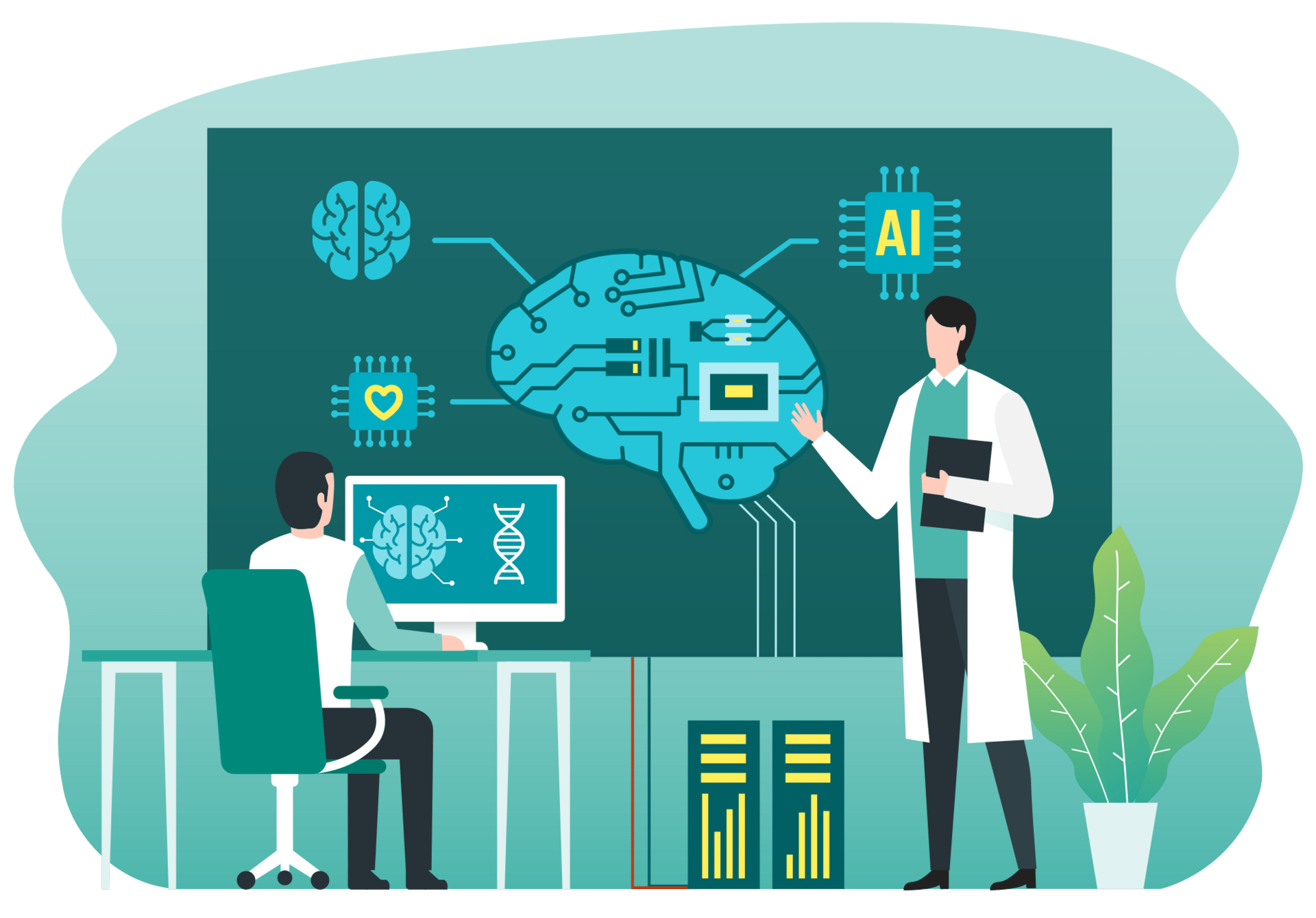
Everyone is talking about AI breakthroughs, but the real bottleneck is not the models. It is the gap between excitement and execution. Most organizations still struggle to move from demos to deployment, from experiments to outcomes.
The challenge is not capability. Modern AI systems can analyze data, draft content, automate workflows, and support decisions. The challenge is integration. Legacy systems, unclear ownership, and slow internal processes often keep AI stuck in pilot mode.
Across industries, leaders are realizing that the question is not “How advanced is the model?” but “Can our organization actually use it?” Teams that pair AI with clear workflows, defined responsibilities, and measurable goals are pulling ahead fast.
Pro tip: Start small, operationalize early, and optimize continuously. AI impact comes from consistent usage, not one-off showcases.
Without real adoption, even the smartest AI becomes just another expensive idea on a slide.
What We’re Tracking:
Edge and Immersive Computing: Moving Beyond Cloud to Real Time Interaction
Emerging startups are betting big on distributed edge computing, immersive XR (AR/VR) and real time data processing, aiming to shift many workloads out of central cloud infrastructure and closer to users or “the edge.” As devices get more compute‑powerful and connectivity (5G/6G) improves, this architecture becomes feasible for mass adoption.

Challenges include hardware constraints (power, latency, standardization), delivering smooth user experience across devices, and building applications that justify the added complexity versus traditional cloud or mobile‑app models. Plus, widespread adoption depends on ecosystem support (networks, device availability, developer tools).
The opportunity is clear though. For sectors like real time collaboration, remote work, gaming, industrial monitoring, logistics, and even remote healthcare, being able to process data locally or at the edge enables lower latency, more privacy, and novel interaction models. Early adopters could set the standards for immersive, responsive and decentralized digital services.
For startup‑minded builders, edge + immersive + AI‑ready architectures could become a new frontier, combining physical‑device advantage with software scalability.
Is the future of digital services shifting from cloud‑first to edge‑first?
Crack This!
Answer to the last riddle: Pivot
Did you guess it right?

I exist in the background, unseen yet vital,
I connect actions, people, and resources.
I smooth operations and reduce friction,
Without me, everything grinds to a halt.
What am I?